- By Smitha
- 22 Oct, 2026
Why Group Activities Matter at a Pre KG Nursery in Dubai
A child’s early learning journey is filled with new experiences, exciting discoveries, and little moments that make a big difference. From singing songs with classmates to building towers with blocks, everyday activities can help children develop skills that support their growth. At a Pre KG nursery in Dubai, group activities give young learners opportunities to explore, communicate, make friends, and become more confident in a supportive environment.
Children learn a great deal through interaction. When they participate in activities with their classmates, they begin to understand how to share, listen, cooperate, and express their feelings. These experiences make early education more enjoyable while helping children develop important skills for their future learning.
At First Choice Nursery, early learning focuses on providing children with opportunities to explore their interests, participate in meaningful activities, and develop at their own pace.
1. Helping Children Build Confidence
Starting nursery can be a big change for young children. They meet new people, explore unfamiliar surroundings, and learn to participate in classroom routines. Group activities can make this transition more comfortable by giving children opportunities to join in gradually.
Simple activities such as singing familiar songs, playing movement games, or creating artwork together allow children to participate without feeling pressured. A child who is initially shy may become more comfortable after watching classmates and joining in when ready.
Every small achievement matters. Answering a question, sharing an idea, or helping complete a group activity can give children a sense of accomplishment.
With encouragement from teachers and positive interactions with classmates, children can gradually develop the confidence to express themselves and try new experiences.
2. Developing Social Skills Through Play
Learning to interact with others is an important part of early childhood development. At a Pre KG nursery in Dubai, group play provides opportunities for children to practise everyday social skills in a natural setting.
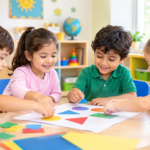
Activities such as building with blocks, playing simple games, or working on a shared art project encourage children to share resources, take turns, and cooperate. These experiences help them understand that their classmates also have ideas, feelings, and preferences.
Children may occasionally disagree about which toy to use or how to complete an activity. With gentle guidance, they can learn to communicate their needs, listen to others, and find simple solutions.
Over time, these interactions can help children build friendships and become more comfortable participating in group settings.
3. Improving Communication and Listening Skills
Children develop language skills through conversations, stories, songs, and everyday interactions. Group activities create opportunities for them to practise speaking and listening while learning alongside their peers.
For example, during a storytelling session, children may be encouraged to identify characters, describe pictures, or talk about what might happen next. These questions help them express their thoughts, learn new words, and understand different ideas.
Group singing and rhymes also introduce rhythm, repetition, and familiar vocabulary. Meanwhile, activities that involve following simple instructions help children develop listening skills and understand classroom routines.
At First Choice Nursery, interactive learning experiences can encourage children to communicate naturally, ask questions, and express their ideas in a welcoming environment.
4. Encouraging Teamwork from an Early Age
Teamwork begins with simple experiences. When children complete a puzzle together, build a structure with blocks, or create a group picture, they learn how individual contributions can help achieve a shared goal.
These activities encourage children to exchange ideas, share materials, and help their classmates. They also begin to understand that everyone can contribute in different ways.
For instance, one child might choose the colours for an art project while another helps arrange the materials. Working together gives both children an opportunity to participate and appreciate each other’s efforts.
These early experiences introduce the foundations of cooperation and help children become more comfortable working with others as they progress through their education.
5. Making Learning More Enjoyable
Young children are naturally curious and often enjoy learning through movement, exploration, and hands-on experiences. Group activities combine these elements to make classroom learning engaging and interactive.
Counting games can introduce numbers, while sorting activities help children recognise colours, shapes, and patterns. Music and movement encourage coordination, and creative projects allow children to explore different materials and ideas.
Outdoor group games can also provide opportunities to practise following instructions, moving safely, and interacting with classmates.
By connecting educational concepts with enjoyable activities, educators can help children develop an interest in learning. Each activity becomes an opportunity to explore something new while practising important foundational skills.
6. Teaching Children to Understand Their Emotions
Early childhood is a time when children begin learning how to recognise and express their emotions. Group activities provide everyday opportunities to practise these skills.
Children may feel excited when they complete a game, disappointed when they have to wait for a turn, or frustrated when something does not go as planned. These experiences can help them learn how to respond to different feelings with appropriate support.
Teachers can guide children to use words to express themselves, listen to their classmates, and understand the importance of kindness and patience.
Activities that involve sharing, helping, and cooperating also encourage empathy. Children gradually begin to recognise that other people may have different feelings and needs.
Developing these skills can help create a more positive classroom environment where children feel supported and learn to treat others with care.
7. Supporting Creativity and Problem-Solving
Group activities give children opportunities to experiment, think creatively, and explore different ways of completing a task.
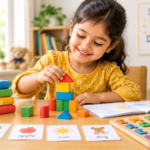
During a building activity, for example, children may work together to construct a tower using blocks. If it falls, they can try different arrangements and observe what happens. This encourages curiosity, experimentation, and simple problem-solving.
Creative activities offer similar benefits. When children work together on a painting or craft project, they can exchange ideas, explore colours, and discover different ways to use materials.
Educators can support this process by asking open-ended questions and allowing children time to explore their own ideas. Rather than focusing only on the final result, the emphasis remains on participation, exploration, and learning through experience.
8. Preparing Children for Future Learning
The skills children develop through group activities can support their transition to more structured learning environments. As they become familiar with classroom routines, children learn to follow instructions, participate in discussions, work with classmates, and complete age-appropriate tasks.
These experiences can help them adjust to new learning situations as they progress from Pre KG to KG1 and KG2.
Group activities also help children become familiar with the idea of learning alongside others. They have opportunities to ask questions, share observations, and listen to different perspectives.
Every child develops at a different pace, so providing encouragement and opportunities to participate is essential. A supportive early learning environment allows children to build these skills gradually.
How Parents Can Encourage Group Learning at Home
Parents can support the benefits of group activities by including simple shared experiences in their child’s daily routine.
Reading picture books together, playing matching games with siblings, building with blocks, making simple crafts, and singing songs as a family can encourage communication and cooperation.
Playdates and supervised group games can also give children opportunities to interact with other children in familiar surroundings.
Parents can help by modelling patience, encouraging children to share, and guiding them through disagreements calmly. Celebrating effort rather than expecting perfection helps children feel comfortable trying new activities.
When these experiences complement nursery learning, children receive more opportunities to practise their developing skills.
Give Your Child a Positive Start at First Choice Nursery
Choosing the right early learning environment is an important decision for every family. At First Choice Nursery in Dubai, children can explore the Pre KG, KG1, and KG2 programmes following an Indian curriculum.
Through age-appropriate learning experiences, creative activities, and opportunities for interaction, children can develop foundational skills while enjoying their early years of education.
If you are looking for a Pre KG nursery in Dubai, explore the programmes at First Choice Nursery and learn more about the learning opportunities available for your child.
Visit First Choice Nursery to learn more about the nursery and its programmes.